

Differential and Axle Service
Differential and Axle Service in New Lenox, Steger, Schererville, and Crown Point
When taking a turn, the outside wheels of your vehicle travel a slightly greater distance than the inside wheels. To accommodate this difference, the outside wheels need to rotate faster than the inside wheels.
Your vehicle’s differential makes this possible by allowing the wheels to rotate at different speeds while still receiving power from the engine.
The differential contains a series of gears and bearings that work together to distribute power to the drive wheels. Without a properly functioning differential, your vehicle could experience difficulty navigating turns, excessive tire wear, and potentially serious drivetrain damage.
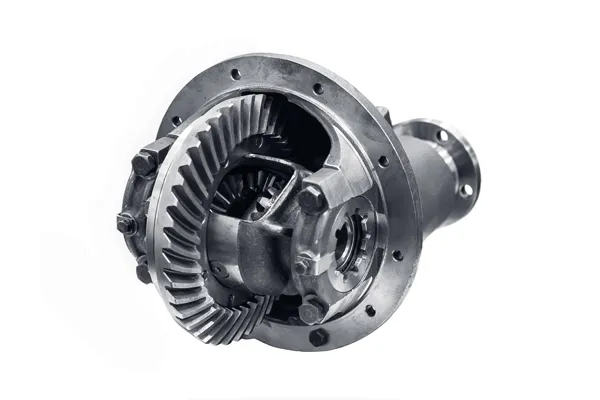
Symptoms of a Bad Differential
- Vibrations
- Grinding Differential Gears
- Whining Noises
- Reduced Handling
- Accelerated Tire Wear
Front and Rear Differential
If you have an all-wheel-drive or four-wheel-drive vehicle, your car is built to send power to all four wheels, so it has both a front and a rear differential. If you have a front-wheel drive vehicle, instead of a differential, you will likely have a transaxle that functions as both the transmission and the differential.
Differential Fluid
Within your differential, you’ll find lots of intertwined gears and bearings. These gears all rely on each other and a lubricant called differential fluid to keep the differential transferring power smoothly and seamlessly. Front differential, rear differential, and limited slip differential (LSD) all require gear oil to lubricate and keep the differential drive components cool.
Axles and CV Joints
Axles carry power from the differential to each wheel. Front-wheel-drive, AWD, and most 4X4 front ends use CV (constant velocity) axles, with flexible joints that keep power flowing while the wheels steer and the suspension moves. A rubber boot packed with grease protects each joint. Once a boot tears, grease escapes and road grit gets in, and the joint wears quickly.
Signs of a worn CV axle: a clicking or popping noise when turning, grease slung on the inside of the wheel, or vibration during acceleration. Trucks with solid rear axles can develop worn axle bearings or leaking axle seals, which often show up as a hum at speed or gear oil on the brakes.
When to Service Your Differential
Many manufacturers recommend changing differential fluid somewhere between 30,000 and 60,000 miles, with shorter intervals for towing, hauling, or off-road use. Limited-slip differentials may also need a friction modifier additive. When we drain the old fluid, we check it for metal particles that can warn of bearing or gear wear before it becomes a bigger repair.
Towing, Hauling, and Lifted Trucks
Towing heats up gear oil and breaks it down faster. Larger tires and lift kits put extra load on gears and change driveline angles. If you tow a camper or boat, or you’ve upgraded your truck, more frequent differential service is cheap insurance.
Differential Service at Scott’s U-Save
Due to your components experiencing significant friction and heat during operation, regular inspections and differential fluid services are important for maintaining their performance and longevity. Luckily, the team at Scott’s U-Save has you covered. With four locations in Steger, IL; New Lenox, IL; Schererville, IN; and Crown Point, IN, getting reliable differential service couldn’t be easier. Our ASE-certified technicians will inspect and service any kind of differential. Whether it just needs a fluid replacement or something more in-depth, our technicians will make sure that your car is safe and comfortable taking corners.
Schedule an Appointment Today!
Don’t let your differential issues turn into more problematic and expensive issues down the line. Our family-run auto repair shops strive to provide customers in our communities with the best prices and customer service in the industry! Call us or schedule an appointment online today!
Frequently Asked Questions
How often should differential fluid be changed?
Commonly every 30,000 to 60,000 miles, though it varies by vehicle. If you tow or off-road, consider the shorter end of that range. Your owner’s manual or our advisors can confirm the right interval.
What does a bad differential sound like?
A whine or howl that changes with speed is the classic sign of worn gears or bearings. Clunking when shifting or accelerating can point to excess play. Grinding means it should be checked right away.
What’s the clicking noise when I turn?
That’s usually a worn outer CV joint on a front axle. Replacing the axle before it fails prevents being stranded and protects other drivetrain parts.
Can I drive with a torn CV boot?
For a short time, but the joint will wear quickly once grease is lost and dirt gets in. Replacing the axle or boot early usually costs less than waiting for it to fail.
Do AWD vehicles have differentials too?
Yes. AWD vehicles have front and rear differentials and often a center differential or coupling. All of them use fluid that needs periodic service.