

TPMS (Tire Pressure Monitoring System)
TPMS Service in Steger, New Lenox, Schererville, and Crown Point
The tire pressure monitoring system (TPMS) warning light can often go unnoticed or even ignored since many consider it unimportant. However, maintaining proper air pressure in your tires is vital to both the drivability and safety of your vehicle. Low pressure in one or more tires can drastically impact the way your vehicle handles and lead to accidents.
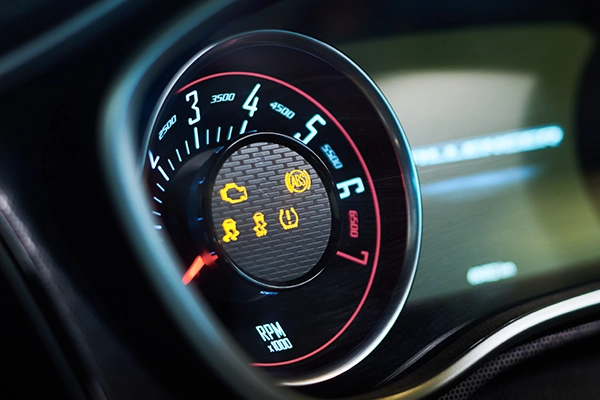
TPMS systems come in two different varieties, direct and indirect. Direct TPMS uses a sensor within the tire itself to monitor exact air pressure, while an indirect TPMS uses relative wheel rotational speed between tires to determine whether the air pressure is adequate or not.
So if you see a light that slightly resembles a horseshoe with an exclamation mark inside, don’t let it linger.
Solid Light vs. Flashing Light
- Solid light: one or more tires is significantly underinflated. Check and adjust your pressures as soon as possible.
- Flashing for about a minute, then solid: the system itself has a fault, such as a dead sensor, a damaged sensor, or a communication problem. Your tire pressure is no longer being monitored until it’s repaired.
Why the Light Comes On When It Gets Cold
Air contracts in cold weather. Tires typically lose about 1 PSI for every 10°F drop in temperature, so the first cold snap of fall often turns on TPMS lights all over town. Check your pressure in the morning before driving and fill to the number on the sticker inside your driver’s door jamb, not the maximum printed on the tire.
Why TPMS Sensors Fail
Direct TPMS sensors run on sealed batteries that commonly last around five to ten years and can’t be replaced on their own. Sensors can also be damaged by corrosion from road salt, a bent valve stem, or improper tire mounting. When one goes, it’s often a sign the others are close behind.
Sensor Testing, Replacement, and Programming
As tire specialists, we handle TPMS every day. We test each sensor, replace failed sensors and valve stem service kits, and program new sensors to your vehicle with the correct relearn procedure. We’re also careful with your sensors whenever we mount new tires, so you leave with a system that works.
TPMS Service at Scott’s U-Save
TPMS systems can fail over time, and ensuring yours is working correctly is important to your safety while driving. The experts at Scott’s U-Save can repair or replace components to keep the system working as it should, so you always have an accurate reading of your tire pressure and peace of mind. Call or schedule an appointment online with us today!
Frequently Asked Questions
Why is my TPMS light on when my tires look fine?
A tire can be 25% underinflated and still look normal. Check each tire with a gauge. If pressures are correct and the light stays on or flashes, a sensor or the system may need service.
How long do TPMS sensors last?
Many last about five to ten years, limited mainly by their internal battery. Age, corrosion, and physical damage can shorten that.
Do I need to replace TPMS sensors when I get new tires?
Not necessarily. If sensors are working and in good condition, we can reuse them with a new service kit. Older sensors near the end of their battery life may be worth replacing at the same time.
Does my TPMS need to be reset after a tire rotation?
Some vehicles need a relearn procedure after a rotation or sensor replacement so the system knows which sensor is in which position. We take care of it as part of the service.
Can I drive with the TPMS light on?
You can drive carefully to a shop or air pump, but low pressure affects handling, braking, fuel economy, and tire life. Don’t ignore it for long.